
Hypermobility
Duis aute irure dolor in reprehenderit in voluptate velit esse cillum dolore eu fugiat nulla pariatur. Excepteur sint occaecat cupidatat non proident, sunt in culpa qui officia deserunt mollit anim id est laborum.

Most women have never explored their own pelvic floor with curiosity. This video guides you through a gentle, informed self-examination so you can begin to understand what is actually happening in your body, not just what you have been told.You will learn how to assess resting tone, identify areas of tension, and begin building a real relationship with your pelvic floor, on your own terms, at your own pace.This helps you understand your symptoms from the inside, know whether your pelvic floor is too tight, too loose, or uncoordinated, and stop guessing about what your body actually needs.

You have probably been told that you are flexible. That your joints are loose. That you need to be careful. Perhaps that your symptoms do not fit neatly into a diagnosis.
This track is built for the body that feels everything, the nervous system that absorbs more than it can always process, and the constitution that needs containment rather than more mobility. It addresses hypermobility as the whole-person picture it actually is: the connective tissue, the autonomic nervous system, the mast cell reactivity, the gut permeability, and the profoundly Vata constitutional picture that ties all of it together.
This helps you understand why conventional exercise approaches make hypermobile bodies worse, what your body actually needs instead, and how to turn the sensitivity that has felt like a liability into the precise and extraordinary instrument it actually is.

IN THIS LESSON
This is a quick release and reset for your system
A bottom-up inhale and top-down exhale to fully empty the system and reset the vagus nerve. When dealing with pain or re-patterning, this is essential, regardless of the simplicity.
If you feel like your body won’t let go, this is where to start.
The Release & Reset Breath is designed to help you:
Let go of deep, unconscious tension
Fully empty your breath (most people don’t)
Downregulate your nervous system
Restore natural breathing patterns

This breath builds real support from the inside out.
If you can’t feel your core or your pelvic floor isn’t activating properly, this is where to start.
The Core Support Breath trains your deep system, including your transversus abdominis, diaphragm, and pelvic floor, to work together for real stability.
This is not about bracing harder.
It’s about creating internal support from the inside out.
This breath helps you:
Activate your deep core (without over-gripping)
Improve pelvic floor function (kegels that actually work)
Build better pressure control and stability
Reduce strain, leaking, or weakness

If you don’t know where neutral is, your core can’t support you. This will help you find it.
Most people don’t actually know where neutral spine is, and without it, your core can’t function properly.
This simple drill helps you:
Find your true neutral position
Improve posture and alignment
Reduce over-arching or tucking
Build a better foundation for movement and strength
How it works:
Using a gentle “rolling” motion through the pelvis, you’ll explore your range and find the balanced center point, your neutral spine.

Most people twist through their spine without awareness, leading to compensation and limited control.
This progression teaches you how to sequence rotation through:
Lumbar spine
Thoracic spine
Cervical spine
This helps you:
Improve spinal control and coordination
Reduce compensation and strain
Increase mobility where you need it
Build awareness through each region of your spine

If your body feels stuck in tension, stress, or overdrive—this 3-part series is designed to help you downregulate and reconnect.
The Sensory Trifecta uses simple, low-load movements to:
Calm your nervous system
Increase vagal tone
Release held tension in the body
Restore a sense of safety and control
Series breakdown:
Hip Circles → gentle release + awareness
Windshield Wipers → unwind tension patterns
Modified Happy Baby → deep relaxation + integration
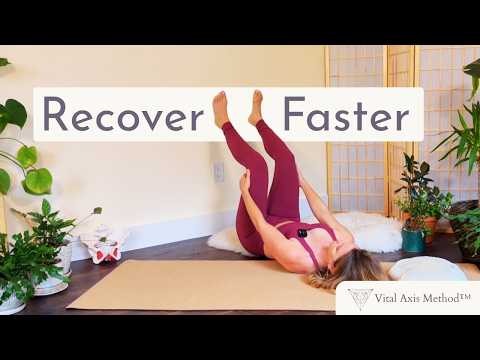
Legs up the wall is a simple but powerful position to help your body recover and reset
This version focuses on:
Nervous system downregulation
Circulation and fluid movement
Full-body relaxation
This helps you:
Reduce fatigue and stress
Improve circulation
Relieve pressure in your legs and back
Feel calmer and more grounded
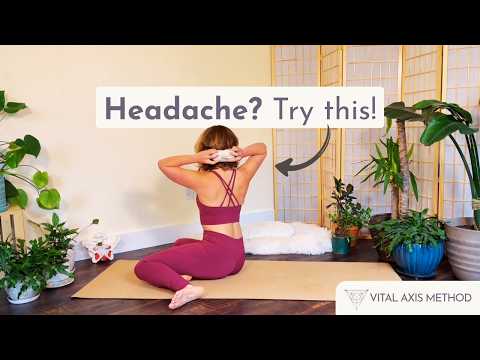
Tension at the base of your skull can contribute to neck pain, headaches, and stiffness.
This gentle release technique targets the suboccipital muscles to help:
Reduce tension
Improve neck mobility
Support relaxation and downregulation
This helps you:
Relieve headaches and neck discomfort
Improve head and neck alignment
Reduce tightness from stress or screen use
Feel more relaxed

Shake & Reset Drill | Lymphatic Flow + Grounding
If your body feels tense, stagnant, or disconnected, this simple shaking drill can help restore movement and flow.
By combining gentle shaking and grounding, this exercise helps:
Stimulate lymphatic circulation
Release built-up tension
Reconnect you to your body
Support nervous system regulation
This helps you:
Feel lighter and more energized
Improve circulation and fluid movement
Reduce stiffness and holding patterns
Reset your system quickly

Most people bend without control, missing the foundation of a proper hinge.
This progression teaches you how to:
Engage through both legs
Control your hinge pattern
Transition into single-leg stability
This helps you:
Improve deadlift and forward fold mechanics
Build strength and control
Reduce strain on your back
Develop balance and coordination

Full Body Lymphatic Reset Flow | Circulation + Recovery
If you’re feeling heavy, swollen, or stagnant, your body may need help moving fluid and restoring flow.
This full-body routine is designed to:
Support lymphatic circulation
Reduce fluid buildup and stagnation
Improve overall body awareness
Reset your system through movement
This helps you:
Feel lighter and more energized
Improve circulation and recovery
Reduce stiffness and swelling
Reconnect to your body

Most people rush through bridges and miss the point.
The Segmental Bridge trains your spine to move with control—one segment at a time—while maintaining stability through your system.
This helps you:
Improve spinal awareness and articulation
Build control instead of compensation
Support your core and pelvic system
Move with more precision and less strain

The glute bridge is one of the most common exercises, but most people do it without proper alignment or support.
This version focuses on:
Clean hip extension
Core and pelvic support
Reducing compensation in the low back
This helps you:
Build stronger, more functional glutes
Protect your spine
Improve movement efficiency
Integrate core and pelvic floor support

Most people lift their arms using momentum, but real shoulder strength comes from control.
The Arm Float Drill helps you:
Build rotator cuff strength
Improve range of motion
Move with control instead of compensation
This helps you:
Strengthen your shoulder safely
Improve mobility without forcing it
Reduce stiffness and instability
Build better movement patterns

Child’s Pose is often treated as a passive stretch—but done correctly, it can help decompress your spine and restore space in your body.
This variation focuses on:
Spinal decompression
Lateral expansion through the ribs and sides
Gentle release without collapsing
This helps you:
Reduce back tension and compression
Improve breathing into your sides and back
Create more space through your spine
Downregulate your system

If your hamstrings dominate during bridges, deadlifts, or workouts, your glutes aren’t doing their job.
This simple prone drill helps retrain the correct sequence:
glutes first, then hamstrings
This helps you:
Improve glute activation
Reduce hamstring overuse
Build better hip extension patterns
Support your pelvis and low back

If your shoulders sink or feel unstable in plank, push-ups, or tabletop, your serratus anterior may not be engaging properly.
This drill (push-up plus) helps activate the muscles that support your shoulders in weight-bearing positions.
This helps you:
Improve shoulder stability
Activate serratus anterior
Prevent collapsing through the upper body
Build better support in plank and tabletop

Cat-Cow is often done too quickly, missing the opportunity to build real spinal awareness.
The Segmental Cat-Cow helps you move your spine one segment at a time, improving control, mobility, and connection.
This helps you:
Improve spinal articulation
Build movement awareness
Reduce stiffness and compensation
Support better posture and control

Most people move their spine in one direction. Your body is built for three.
This Cat–Cow variation introduces lateral and rotational movement to restore true spinal control, improve coordination, and release tension that traditional flexion and extension alone can’t reach.
You’ll learn how to organize your spine through all planes of motion so your movement becomes more fluid, supported, and connected from the inside out.
WHO THIS IS FOR:
Stiff or restricted spine
Low back or pelvic tension
Feeling disconnected in movement
Anyone ready to move beyond basic mobility work
WHAT YOU’LL PRACTICE:
Flexion + extension (Cat–Cow)
Lateral spinal movement
Gentle spinal rotation
Breath-led control through all planes
PRACTICE NOTES:
Move slowly and stay with your breath
Let the movement be small and controlled
Focus on internal sensation, not range
Stop if you feel sharp pain

Most people push into Downward Dog without proper support, leading to shoulder strain and poor alignment.
This prep teaches you how to:
Activate your core
Support your shoulders
Organize your body before lifting into the pose
This helps you:
Reduce pressure in your shoulders and wrists
Improve full-body support
Build strength and control in your practice
Move more efficiently

If your shoulder feels unstable, tight, or painful with movement, you may be missing proper control through your scapula and arm.
This reach and roll drill helps you:
Build shoulder stability
Improve control through rotation
Activate key support muscles (like serratus)
Move your arm without compensation
This helps you:
Reduce shoulder discomfort
Improve strength with control
Support better movement patterns
Build stability for workouts and daily life

This helps you bring your head back into alignment so your neck can actually support you
If your head sits forward, especially when sitting, your neck and shoulders take on unnecessary strain.
This simple seated drill helps you:
Bring your head back into alignment
Reduce tension in your neck and shoulders
Improve posture without forcing it
This helps you:
Decrease neck stiffness and discomfort
Improve support through your spine
Sit with less effort
Build awareness of your head position

Shoulder Stability for Hypermobility | Control + Awareness
If you have hypermobile or “loose” shoulders, strength alone isn’t enough—you need control and awareness.
This drill focuses on proprioception, helping your shoulder:
Sense its position
Stay stable during movement
Build control without over-gripping
This helps you:
Reduce instability and discomfort
Improve shoulder control
Build strength safely
Feel more secure in movement

Most people think posture means staying still—but your spine is meant to move.
This drill helps you:
Find a supported seated posture
Move your spine through all three planes
Build awareness and control
This helps you:
Reduce stiffness from sitting
Improve posture without forcing it
Increase spinal mobility and control
Feel more connected to your body

Most people move their arms in straight lines—but your body is designed for spiral motion.
This drill helps you:
Improve shoulder control
Build coordination through rotation
Connect your arm to your body
Move more efficiently
This helps you:
Reduce stiffness or awkward movement
Improve shoulder function
Build smoother, more natural motion
Support strength and stability

Most people move their arms in straight lines—but your body is designed for spiral motion.
This drill helps you:
Improve shoulder control
Build coordination through rotation
Connect your arm to your body
Move more efficiently
This helps you:
Reduce stiffness or awkward movement
Improve shoulder function
Build smoother, more natural motion
Support strength and stability

Most people try to fix their posture from the top down, but it actually starts at your feet.
This drill helps you:
Strengthen your arch
Improve foot stability
Support better standing alignment
Build posture from the ground up
This helps you:
Reduce collapse through your feet
Improve balance and control
Support your knees, hips, and spine
Stand with less effort

If you have trouble feeling or engaging your body, you’re not alone. Most people skip this step.
This drill uses isometric contractions to:
Improve body awareness
Activate muscles without movement
Build better control and connection
This helps you:
Feel your body more clearly
Improve coordination and control
Prepare for movement and exercise
Build a stronger mind-body connection

Vital Axis Method™
Complete Course Material
This is a living library of clinically developed movement videos organized into five progressive modules: Stability, Mobility, Lymphatic and Abdominal Support, Strengthening and Proprioception, and Dynamic Movement and Activation. You always know exactly where you are and what comes next.
Most movement programs are built for a fictional average body. This one is built on nearly two decades of clinical experience across pelvic health, neurology, orthopedics, integrative medicine, and somatic education and on the understanding that the body is not just a mechanical system. It is a nervous system. A digestive system. A history. A whole person.
Dr. Val brings both the clinical rigor and the somatic intelligence to work with all of it.
The Vital Axis Method™ How This Program Works
Most programs give you exercises. This one gives you a framework for understanding your body as the integrated system it actually is.
If you have been managing symptoms without getting to the root of them, if you have seen the specialists and still feel like something is missing, or if you are simply ready to understand what is actually happening in your body and why, this video is where you begin.
The Vital Axis Method™ is a whole-person pelvic health and embodied sovereignty program built at the intersection of Western clinical science and Eastern wisdom traditions. It was developed by Dr. Valerie Brown, Doctor of Physical Therapy, yoga therapist, and somatic educator, from nearly two decades of clinical practice with women navigating pelvic floor dysfunction, chronic pain, digestive conditions, trauma, hormonal health, and the full spectrum of what it means to live in a body that has been carrying more than it was ever meant to carry alone.
You will also learn the foundational framework that underlies everything in this method: the five koshas, or layers of the whole person, and why lasting healing requires all five to be addressed simultaneously rather than one at a time.
This is not a fitness program. It is not a pelvic floor protocol. It is a complete clinical framework for coming home to yourself, and this video is the beginning of that process.
Structure. Sensation. Sovereignty.