
A whole-body approach to pelvic health for women in perimenopause, menopause, and beyond.
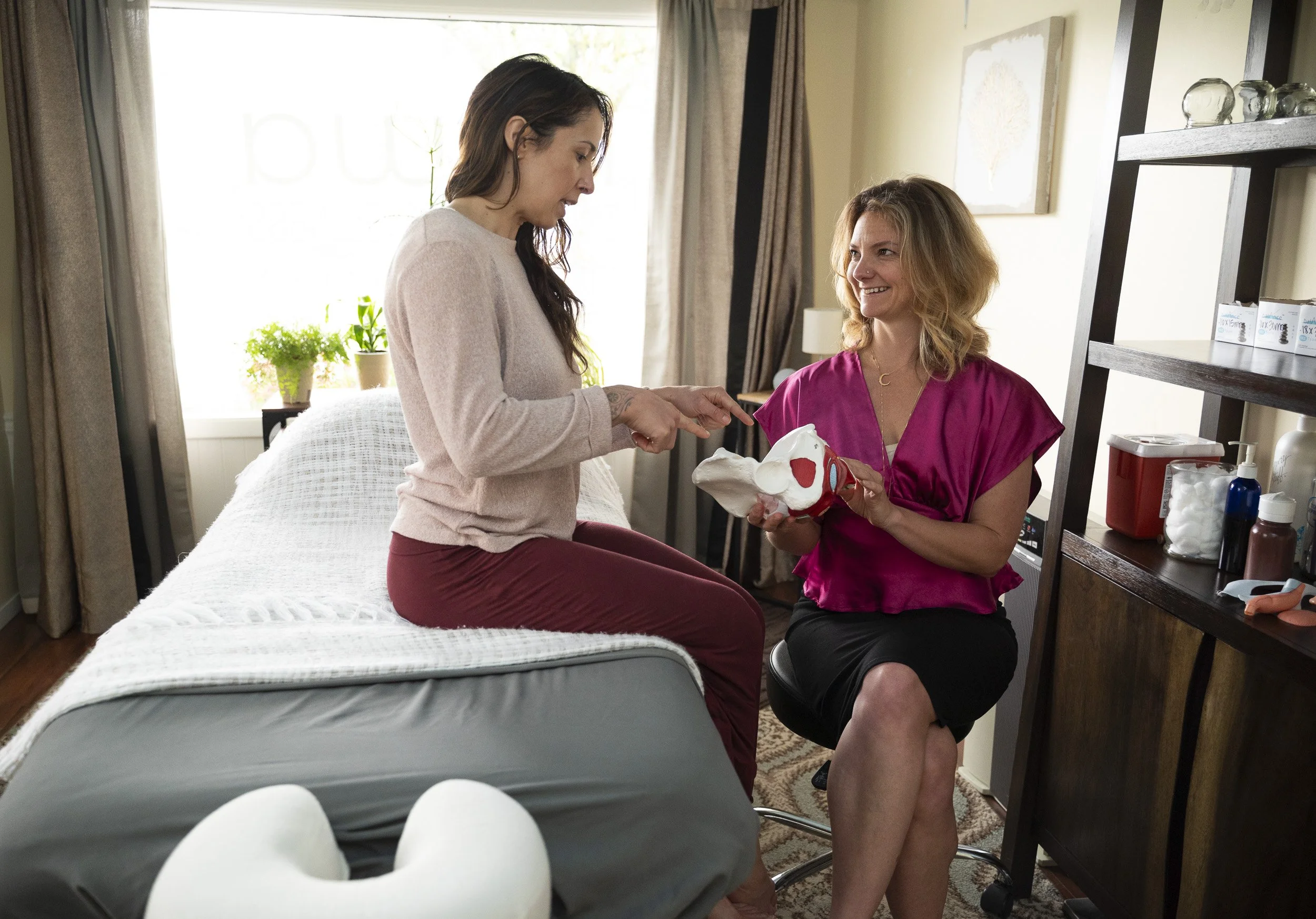
Your pelvis is the central axis of your body. It is where your breath, strength, hormones, nervous system, and sense of self meet. In midlife, every one of those shifts at once. The Vital Axis Method™ brings them back into conversation, so you feel steady, strong, and at home in your body again.
Why a different approach
Most women are offered care in pieces. Hormones with one provider. Bladder and pelvic floor with another. Stress, sleep, and digestion somewhere else, or nowhere at all. But your body has always worked as one system, and midlife makes that impossible to ignore.
The Vital Axis Method™ connects clinical pelvic floor physical therapy with breath, nervous system care, functional movement, and nourishment. It draws on functional medicine to find root causes, lifestyle medicine to support the everyday foundations of stress, sleep, nutrition, movement, and environment, and integrative medicine to blend Western science with Eastern practices like yoga, breathwork, and Ayurveda. It is not about fixing you. It is about helping you come home to yourself.
WHY START WITH THE GUT?
Your gut is the foundation of your health. It shapes your hormones, metabolism, energy, mood, and even your pelvic floor.
That’s why gut health sits at the center of the Vital Axis Method™. When the foundation is supported, the rest of the body has room to heal.
If your gut microbiome is out of balance, your sensation, structure and ability to put a plan into action will be hindered.
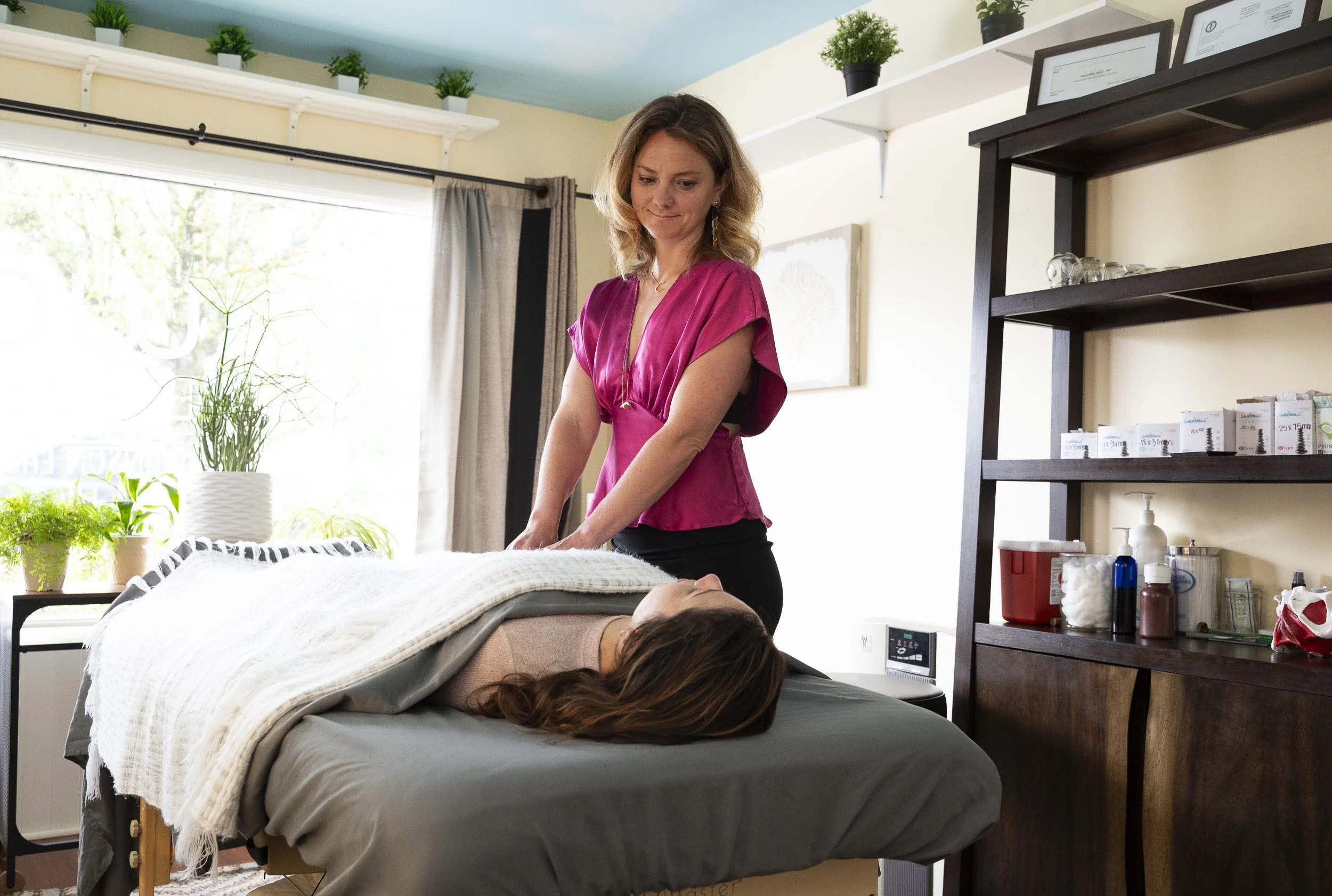
The Method, in Order
Most approaches start with structure: fix the posture, strengthen the muscle, correct the position. The Vital Axis Method™ starts one layer deeper, because a body that cannot feel itself cannot safely receive structural change, and a body that lacks structure cannot fully inhabit sovereignty.
-

Sensation: learn to listen again
Over the years, your body quietly learns to compensate for injuries, births, and stress, often without you feeling it. We begin with breath, awareness, and nervous system care so your brain can sense your body clearly again. Your pelvic floor learns when to soften and when to engage. Bracing eases, urgency calms, and intimacy can feel safe again.
What you will feel: more ease, less tension, a body that feels familiar.
-
Structure: rebuild your support
We restore strength and coordination in the pelvic floor, hips, glutes, and deep core. Instead of a long list of isolated exercises, we train connected chains of muscle the way your body actually moves, in the positions of your daily life and the activities you love. Strength is one of the best investments you can make for the decades ahead.
What you will feel: steadier, stronger, more confident lifting, hiking, laughing, and living.
-
Sovereignty: lead your own care
You leave with the understanding, practices, and tools to care for your body through every season that follows, including at-home options like a pelvic wand or biofeedback device when they're right for you. You know what is happening, why, and what to do about it.
What you will feel: informed, capable, and in charge of your own health.

What makes it work
Muscles and the stress response. Your deep hip flexors, diaphragm, and neck muscles are closely tied to how your body responds to stress. When they release, the pelvic floor and breath often follow. For you: less bracing, easier breathing, calmer urgency.
Cortical remapping. Your brain's map of your pelvis can blur with pain, birth, or years of disconnection. Focused practice sharpens it again. For you: better coordination, control, and sensation.
Connected movement. Your muscles work in long chains linked by fascia, from your feet to your head. We train them together, in real-life movement. For you: support that shows up on the stairs, on the trail, and with the groceries.
At-home tools. A pelvic wand brings blood flow and helps you reconnect with your body on your own terms. A biofeedback device shows your pelvic floor in real time, so short daily practice becomes lasting change. For you: progress that continues between sessions.
Functional nourishment. Supporting steady energy, digestion, and muscle as your metabolism shifts. For you: a body with the resources to rebuild.
Mindfulness and Yoga Nidra. A guided practice of deep rest that helps the nervous system settle. For you: better sleep and a body that can finally exhale.
The whole you. A yogic map of the layers of who you are, from body and breath to mind and spirit. For you: care that honors all of you, not just your symptoms.

Common reasons women come to me in midlife
Bladder urgency, frequency, or waking at night
Leaking with coughing, laughing, lifting, or exercise
Pelvic heaviness or pressure
Pain or discomfort with intimacy
Hip, low back, or pelvic pain
Changes in skin, bones, and joints
Shifts in metabolism and hormones
Wanting to stay strong and active for the decades ahead
The Vital Axis Method™ also supports women through vital transitions that open a doorway into expanded purpose, pleasure and inner power.
“I've worked with a lot of practitioners over the years. Val truly stands out. She's honest. She's kind. She's knowledgeable and intuitive. I highly recommend her.”
Client Testimonials
-
![A smiling woman with long blonde hair holding a baby wearing a colorful elf hat and blue pajamas with festive patterns, in a decorated room with balloons and teddy bear-shaped balloons in the background.]()
A.W. Psychologist and Mother
"Dr. Val Brown offers incredible services with unmatched care and knowledge. I took her group coaching course and was amazed by how beautifully Dr. Brown led us through the course. We got the opportunity to learn from her and connect with other women. I also have had teletherapy Physical Therapy appointments with her and she was amazing. I cannot recommend Dr. Brown and her services highly enough."
-
![A woman with long, wavy, blonde hair smiling while holding a pair of black headphones in a cozy, artfully decorated room with wooden walls, a skeleton model, bookshelves, and a bed with a yellow blanket.]()
Y.M. Healer & Community Leader
"I am extremely grateful for Dr Val’s way of blending skilled biomechanical knowledge with intuitive compassion and insight. When I first went in for my session I was coming in with mental overwhelm and emotional fatigue. After one session with her I felt calm, clear, open, and completely comfortable and relaxed in my body. I often slip into ADHD characteristics so these sessions are imperative for my wellbeing. After having experienced other body workers who didn’t have core empathic skills or gentle touch, I’ve come to realize how paramount a sense of comfort and safety is in order for true healing to happen on all layers of my body, psyche, and nervous system. I immediately felt comfortable in her presence and easily dropped into a calm state with her gentle touch. The craniosacral helped immensely with me attuning to the sense of safety in my body and nervous system, which I feel allowed me to receive the adjustments from the vibroacoustic sound therapy in a deeper way. "
-
![A woman with long, wavy, blonde hair smiling while holding a pair of black headphones in a cozy, artfully decorated room with wooden walls, a skeleton model, bookshelves, and a bed with a yellow blanket.]()
T.F. Entrepreneur & Vocal Artist
"Valerie is a highly intuitive and trained physical therapist. She has helped me with my back pain and my nutrition. Her touch is so relaxing and healing. I look forward to seeing her every week. I recommend everyone to go see her!"
-
![A woman with long gray hair, glasses, and a black shirt standing indoors against a dark background.]()
R.M. Yoga Instructor & Studio Founder
"I've had a long time injury to my neck and shoulder since a car accident in 2015. Recently I've been experiencing some serious nerve pain and had difficulties moving my arm. I've had three visits with Dr. Val and I knew after the first visit that I was going to have an experience that would be much more healing and longer lasting than my previous ones. Not only is Dr. Val a physical therapist, she is also a deeply intuitive healer who uses all of her training and skills to address the underlying issues of injury or pain. She is a truly integrative practitioner who focuses on you with a sensitivity of someone who knows how difficult it can be to trust that your needs will be met by someone in the medical field. I highly recommend Dr. Val. Especially if you are looking for someone with a true holistic view of medicine and wellness."
-
![Woman smiling outdoors, wearing a wide-brimmed straw hat, black sunglasses, and a sleeveless animal print top, with a blurred background of greenery and flowers.]()
L.S.M Mother & Teacher
"I have had the opportunity and privilege to work with Val Brown in her group coaching series as well as individual sessions! Val led her classes with such enthusiasm and attention to my individual needs. She accommodated her activities to my needs for arthritis and Ehler’s- Danlos, as well as my desire to keep hiking and playing even though my body hit 60! She respected my age and celebrated it as we made new goals to keep striving physically! I loved the community I felt in her classes with other people of all ages. Thank you for the experience."
-
![A smiling woman with short gray hair wearing sunglasses and a pink jacket standing outdoors with greenery in the background.]()
C.B. Grandmother, Retired Benefits Analyst
"Dr. Val Brown led the lifestyle medicine group coaching series and I was highly impressed. She combined dancing, journaling and pairing with other women in the class to explore how we can nurture our bodies and minds at any age. Dr. Val’s gentle nature created the safe space that is vital for exploring what issues help or hinder our growth. What a treat to be surrounded and supported by such an intuitive teacher. I highly recommend her series."
-
![Woman with long, curly blonde hair and blue eyes wearing a floral crown of large pink and peach flowers, in a setting with pink lighting.]()
C.H. Mother & Healer
"Dr Val is such an amazing support for my PT. Ive learned within weeks how to do exercises at home that support my wounded knee. Why and what this does for me was explained by her with a visual of the anatomy behind it. I used these practices while hiking recently and they were amazing. I didnt feel pain which was not the case before . So much knowledge. Im trying to soak it all up and apply it to my body. I would recommend her treatment and care to anyone who needs PT. The Sound healing was also such a great addition. So relaxing. I love the gentleness and knowledge dr val carries in her practice . Thank you so much excited to keep working with you in my healing journey."
-
![Woman with face painted with rainbow colors, wearing a rainbow tie-dye dress, at an outdoor festival or gathering, smiling and laughing.]()
Kezia, Musician
Val is a gifted healer, a skilled practitioner and a lovely human. In one session she found the source of pain that had eluded my doctors, and the treatment combined with her follow up suggestions...game changers! I can't recommend highly enough!!
-
![A woman with wavy, reddish-brown hair, smiling, wearing a light purple top, standing against a plain, light-colored background.]()
K.M. Interior Stylist
I came into Dr Val with tbi/neuro symptoms very flared up. I was feeling much head pain, frustration, overwhelm and overstimulated upon meeting with her. She was such incredibly kind, calming energy, and had incredibly intuitive touch. I walked out with less pain, and with my nervous system in a much a better place then when I arrived. And appreciated the great information she shared as well.


Frequently Ask Questions
It’s always nice to connect in person to ask your questions, but here are some I often receive.
-
No. This is a private pay practice. Working outside insurance means sessions are not rushed and are not constrained by diagnosis codes rather than what your body actually needs. A superbill is available on request for potential out of network reimbursement, depending on your plan.
-
This is high touch, time intensive work, and refunds are not available once a program has begun. Fit is confirmed carefully before you start, so you can move forward with real clarity.
-
Yes, though not in the way most people expect. This is not a quick fix or a passive treatment. It asks for attention, consistency, and real engagement. Clients who commit to the process commonly find a stable, responsive core, less pain without constant management, more ease in daily movement, and a deeper sense of trust in their own body. Many arrive here after other approaches did not hold, because this one addresses the underlying system rather than the symptom on top of it.
-
It overlaps, but it is not the same. Most systems focus on muscles, positions, and external alignment. This method also addresses breath and internal pressure, nervous system integration, sensory awareness, gut and functional health, and the deeper reason behind the work. That is why results tend to last.
-
Most clients notice a shift in awareness within the first few sessions. Lasting change builds across the full two month process, as your body learns to organize itself consistently rather than only during a session.
-
Yes, with one caveat. Consistency matters. Following multiple systems at once can send mixed signals to the body, so part of the work is simplifying and prioritizing what actually supports your progress.
-
This is not a single session or a fixed protocol. You are paying for full system retraining rather than symptom relief, individualized high touch care, ongoing access and feedback between sessions, and a process built for change that lasts. Most clients arrive here after years, and often significant money, spent on approaches that did not hold. This is built to end that cycle.
-
Less than most people expect, with more intention than most people bring. Sessions happen every other week, with roughly five to fifteen minutes of daily practice woven into your existing routine. This is not about adding more to your plate. It is about changing how you use your body in what you are already doing.
-
That is a fair question, and most clients feel some skepticism at first, especially after trying other approaches without lasting results. What is different here is the focus on internal pressure systems, nervous system integration, and sensory awareness. We are not adding more exercises on top of dysfunction. We are changing the system those exercises depend on. You do not need to believe in it for it to work. You need to be willing to engage with it consistently.