Your Neck and Shoulders Are Not the Problem. Here Is What Is Actually Driving Your Pain.
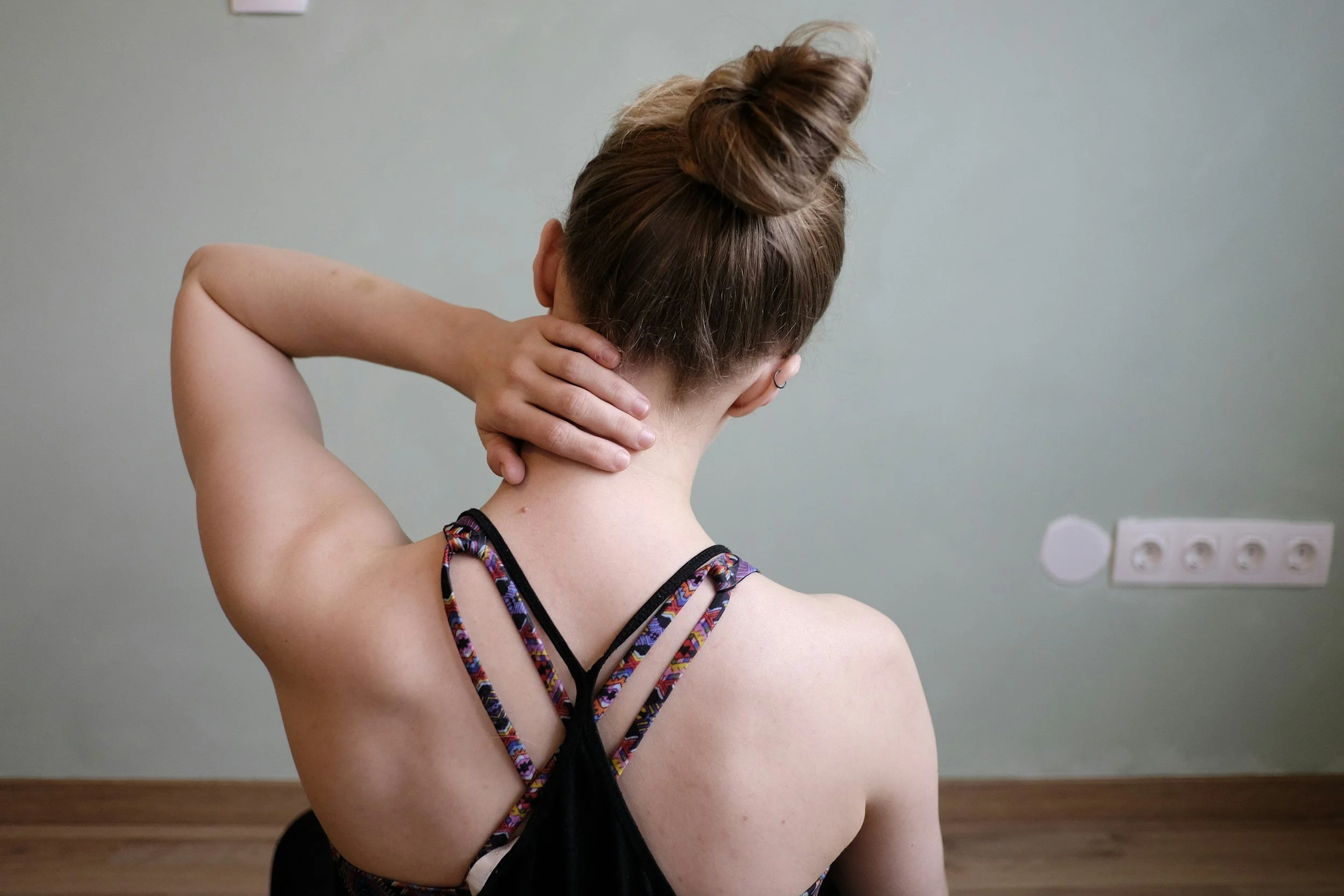
You carry your tension in your neck and shoulders. You know this because everyone who has ever touched them has told you so, usually with a sharp intake of breath and a comment about how tight you are.
You have had the massages. You have done the stretches. You have tried the ergonomic setup and the standing desk and the cervical pillow that was supposed to change everything. And the tension always comes back, often within days, sometimes within hours, because the source of it has never been addressed.
Your neck and shoulders are not the problem. They are the output of a problem that starts elsewhere, and until that problem is addressed, no amount of treatment at the symptom level will produce lasting relief.
Where Neck and Shoulder Pain Actually Comes From
The forward head position that is almost universally present in women with chronic neck pain does not originate at the neck. It originates at the breath.
A chest-dominant breathing pattern elevates the ribcage and the shoulders with every inhale, pulling the head forward in compensation over thousands of breath cycles per day. The thoracic spine, restricted in its rotation by years of sitting and the habitual postures of screen use, recruits the cervical spine to compensate. The nervous system, running in chronic low-grade activation, maintains the muscles of the neck, jaw, and upper trapezius in a persistent state of readiness for threat that never quite releases.
The result is a neck that is doing the work of the thoracic spine, the breath, and the nervous system regulation system simultaneously, in addition to simply holding up a head that weighs ten to twelve pounds and migrates two to three inches forward of its center of gravity in the average person who uses a screen for more than two hours daily.
Addressing the neck in isolation from this system produces temporary relief. Addressing the system from the pelvis upward produces the change that holds.
The Dural System and the Pelvic Floor
One of the most surprising anatomical relationships for most people is the direct connection between the neck and the pelvic floor through the dural membrane of the central nervous system.
The dura mater, the outermost membrane of the central nervous system, attaches to the inner skull at the top and to the sacrum and coccyx at the bottom, running the entire length of the spinal canal as a continuous sleeve of connective tissue. Tension at either end of this system is transmitted to the other. Chronic neck tension creates tensional forces that travel through the dural tube to the sacrum and the pelvic floor. Chronic pelvic floor holding produces forces that travel upward to the cervical spine and the suboccipital region.
This is why the Vital Axis Method™ neck and shoulder track includes pelvic floor practices. They are not peripheral. They are a different entry point to the same system, and for some women they produce cervical release that direct neck work has not been able to access.
The Vagus Nerve and Gut Inflammation
The vagus nerve exits the brainstem and travels through the neck before innervating the heart, the lungs, and the entire digestive tract. Chronic gut inflammation produces inflammatory signaling through the vagal pathway that sensitizes the cervical nerve roots and contributes to the neck pain and headache that many women with gut dysfunction also experience.
The suboccipital muscles at the base of the skull are directly affected by the dural tension that travels from the sacrum upward, and gut motility dysfunction, particularly constipation, creates the downward sacral tension that manifests as suboccipital tension and cervicogenic headache. Addressing bowel regularity and gut inflammation is therefore structural work for the neck, not peripheral digestive support.
The Throat Chakra and Chronic Neck Tension
The neck and shoulders are among the most somatically expressive regions of the body. They carry what has not been said, what has been braced against, what has been shouldered alone for too long.
The throat chakra, Vishuddha, governs authentic expression, the voice, and the right to speak one's truth. Chronic neck tension is one of the most consistent somatic expressions of a throat chakra that has learned to hold back what needs to be said, to swallow what needs to be expressed, to keep the voice small in contexts where making it larger felt dangerous.
The Vital Axis Method™ addresses both the mechanical and the somatic dimensions of neck and shoulder pain, because the lasting resolution of chronic tension in this region almost always requires both.
What the Vital Axis Method™ Offers for Neck and Shoulder Pain
The Vital Axis Method™ Neck and Shoulder Pain track addresses the breath mechanics, the thoracic mobility, the cervical spine organization, the nervous system state, the gut inflammation, and the somatic patterns of holding that maintain chronic tension in the neck and shoulders. The sequence moves from the pelvis upward, restoring the foundation that the neck has been compensating for, so that the release at the top can actually hold.
Tiers of support are available for every budget and schedule, from self-guided programs to personalized clinical guidance and retreat-style immersions.
Your neck and shoulders have been carrying something for a long time. The practices of the Vital Axis Method™ have begun to create the conditions for putting it down. The foundation is there. Keep building.
Learn more at vitalaxispt.com.